Check out this great blog post from Eating . . . Our Words, a blog hosted by Houston Press. It details ten species of endangered fish that are still commonly eaten, and asks the question "Why are we still eating species that are on the verge of collapse?"
10 Fish You're Eating That Are Endangered Species
Here's a list of different organizations and advisories focusing on sustainable seafood choices.
28 September 2011


22 June 2011
Responsible Reading
Tasmanian Devil (Sarcophilus harrisii), Endangered

Check out this anthology of 'speculative fiction.' Titled Extinction Doesn't Mean Forever, the stories are themed around extinct or imaginary creatures returning to the modern world. The authors have decided to donate the profits earned between July 1 and July 15, 2011 to help save the Tasmanian Devil.
Download a copy of their book during those two weeks and you can help prevent the extinction of the Tasmanian Devil.
Check out these previous posts on the Tasmanian Devil to learn what's been causing their decline, or check out the Save the Tasmanian Devil website for the latest news and information.

Check out this anthology of 'speculative fiction.' Titled Extinction Doesn't Mean Forever, the stories are themed around extinct or imaginary creatures returning to the modern world. The authors have decided to donate the profits earned between July 1 and July 15, 2011 to help save the Tasmanian Devil.
Download a copy of their book during those two weeks and you can help prevent the extinction of the Tasmanian Devil.
Check out these previous posts on the Tasmanian Devil to learn what's been causing their decline, or check out the Save the Tasmanian Devil website for the latest news and information.
03 May 2011
Bluefin Blues
Northern Bluefin Tuna (Thunnus Thynnus), Critically Endangered
I'm in Japan for my brother's wedding, and I almost cried. Not because of the wedding. Because of the Bluefin Tuna.
The Bluefin Tuna, known in Japan as Hone Maguro, is prized as a delicious morsel of sushi and is extremely popular. I went down to the Tsukiji Fish Market in Tokyo, the largest wholesale seafood market in the world, two days ago, hoping to get a glimpse of the auction where the Tuna are sold. The Tuna auction (and the entire wholesale portion of the market) was closed to tourists, so my family and I snuck in. Walking past aisle upon aisle of Shellfish, Molluscs, and hundreds of Fish species, I was appalled to see a sign for a booth selling Whale. My mother reminded me that fishing was in my heritage (I'm half Japanese), and I felt ashamed.
 Though I only managed to get a few glimpses and blurry photographs of the rows of frozen Tuna bodies as the guards were escorting us out, I was sad and angry that we are still killing and eating a species that is so close to extinction.
 The next day, I went to a sushi restaurant with my aunts, grandparents, uncles, brothers, nieces, parents, and sister-in-law. Several of them selected slender cuts of Bluefin as they scrolled by on the moving conveyor belt. They hid their eyes from me in joking half embarrassment as they downed the delicious morsels. That's when I almost cried.
Experts estimate that sometime in 2012 (2012!!!) the Bluefin Tuna will pass the point of no return on the road to extinction, unless something changes.
If you want to help make the change and stop the extinction, support these guys. They're going to make a direct last ditch direct effort to stop illegal fishing, since much of the Tuna sold on the market is caught illegally. They also made the animation at the start of this post and are working on several other campaigns to raise awareness about our impact on the Bluefin Tuna.
For a broader scale impact, support WWF, who are working from a more political angle to stop the unsustainable fisheries practices.
Also, please, stop eating Bluefin Tuna. I don't want to cry.
I'm in Japan for my brother's wedding, and I almost cried. Not because of the wedding. Because of the Bluefin Tuna.
The Bluefin Tuna, known in Japan as Hone Maguro, is prized as a delicious morsel of sushi and is extremely popular. I went down to the Tsukiji Fish Market in Tokyo, the largest wholesale seafood market in the world, two days ago, hoping to get a glimpse of the auction where the Tuna are sold. The Tuna auction (and the entire wholesale portion of the market) was closed to tourists, so my family and I snuck in. Walking past aisle upon aisle of Shellfish, Molluscs, and hundreds of Fish species, I was appalled to see a sign for a booth selling Whale. My mother reminded me that fishing was in my heritage (I'm half Japanese), and I felt ashamed.

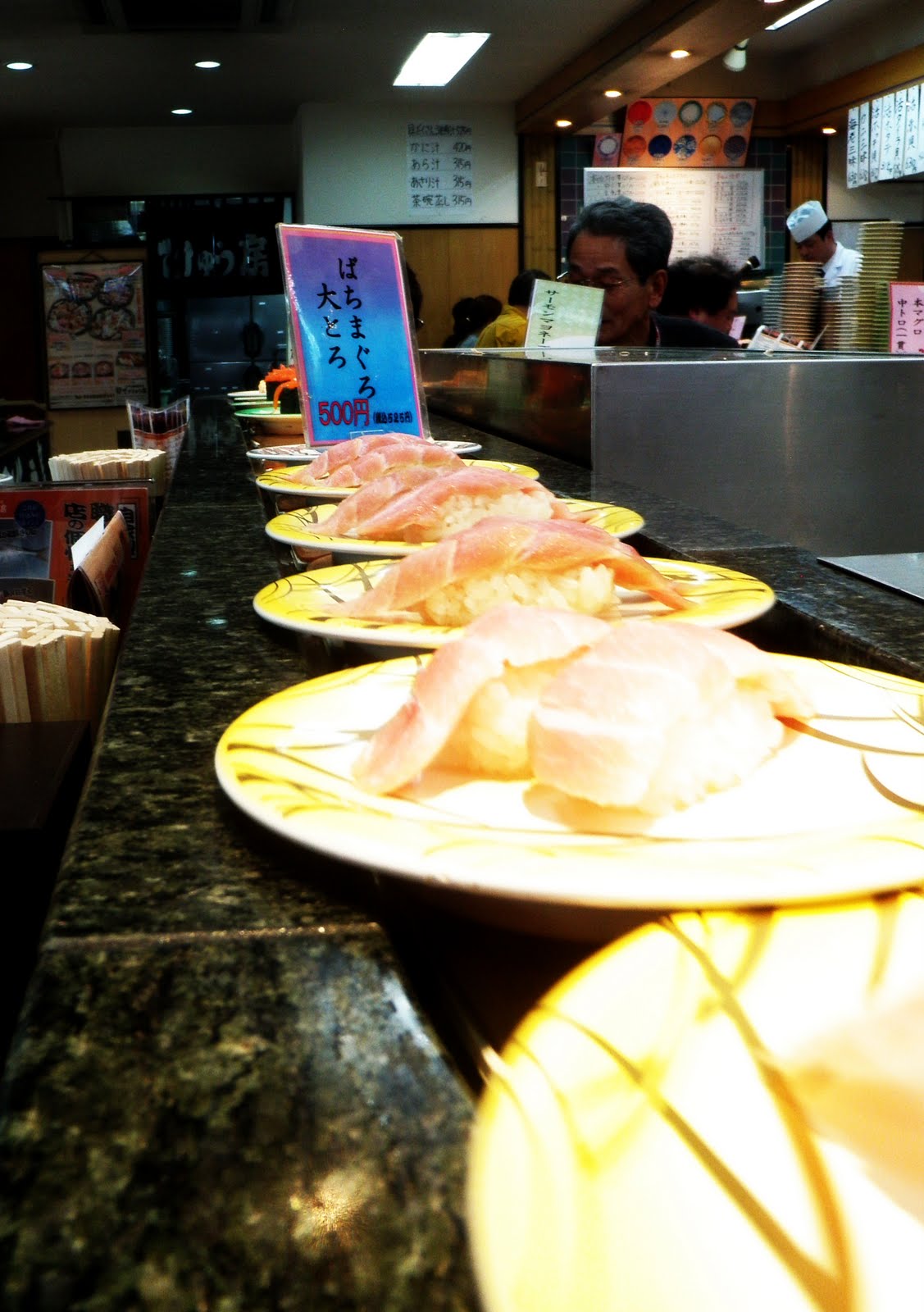
Experts estimate that sometime in 2012 (2012!!!) the Bluefin Tuna will pass the point of no return on the road to extinction, unless something changes.
If you want to help make the change and stop the extinction, support these guys. They're going to make a direct last ditch direct effort to stop illegal fishing, since much of the Tuna sold on the market is caught illegally. They also made the animation at the start of this post and are working on several other campaigns to raise awareness about our impact on the Bluefin Tuna.
For a broader scale impact, support WWF, who are working from a more political angle to stop the unsustainable fisheries practices.
Also, please, stop eating Bluefin Tuna. I don't want to cry.
19 April 2011
Numbat Numbers
Numbat (Myrmecobius fasciatus), Endangered
 Having just spent several months living and working in Australia, Australian species are especially interesting to me right now. Koalas, Kookaburras, and Kangaroos all crossed my path, as did Wallabies, Wattles, and Wombats. What didn't cross my path was a small creature known as a Numbat. This is likely because the Numbat is no longer common in the state of Victoria, where I spent almost all of my time.
Numbats used to live all across the southern regions of Australia. Their population was reduced to two tiny pockets in the state of Western Australia after the introduction of foxes. Since then, it has been reintroduced to a few small conservation areas, but still numbers less than a 1 000 animals in the wild.
The Numbat diet is a little bit monotonous, consisting of nothing but termites. Each individual can eat between 10 000 and 20 000 termites in a day! Unlike many other termite eating animals, however, Numbats are small, and lack claws or any other method to open up termite nests. This means that they have to forage for termites when the termites themselves are out of the nest foraging--that is, during the day--making it one of the very few marsupials active during the day. Being active during the day like this is thought to make them more susceptible to predation.
In the evening, when they aren't foraging, these rare marsupials retire to their burrows, which are very often inside of hollowed out logs. It is thought that an abundance of hollow logs to hide in may have saved the two groups of Numbats that survived in Western Australia, as they provided protected hiding places from predators.
These stripy furry animals are cute, no doubt about it. They're one of Western Australia's State Emblem's, and they've also been chosen as the icon for the Conservation Council of Western Australia. A captive breeding and reintroduction program is underway, and Numbats are bred at Perth Zoo and released each year into managed habitat. Here's a great video about hand-rearing baby Numbats at the zoo.
If you want to help Numbats, you can donate to Perth Zoo's Wildlife Conservation Action.

Numbats used to live all across the southern regions of Australia. Their population was reduced to two tiny pockets in the state of Western Australia after the introduction of foxes. Since then, it has been reintroduced to a few small conservation areas, but still numbers less than a 1 000 animals in the wild.
The Numbat diet is a little bit monotonous, consisting of nothing but termites. Each individual can eat between 10 000 and 20 000 termites in a day! Unlike many other termite eating animals, however, Numbats are small, and lack claws or any other method to open up termite nests. This means that they have to forage for termites when the termites themselves are out of the nest foraging--that is, during the day--making it one of the very few marsupials active during the day. Being active during the day like this is thought to make them more susceptible to predation.
In the evening, when they aren't foraging, these rare marsupials retire to their burrows, which are very often inside of hollowed out logs. It is thought that an abundance of hollow logs to hide in may have saved the two groups of Numbats that survived in Western Australia, as they provided protected hiding places from predators.
These stripy furry animals are cute, no doubt about it. They're one of Western Australia's State Emblem's, and they've also been chosen as the icon for the Conservation Council of Western Australia. A captive breeding and reintroduction program is underway, and Numbats are bred at Perth Zoo and released each year into managed habitat. Here's a great video about hand-rearing baby Numbats at the zoo.
If you want to help Numbats, you can donate to Perth Zoo's Wildlife Conservation Action.
22 January 2011
Yaminon

Northern Hairy Nosed Wombat (Lasiorhinus krefftii), Critically Endangered
This cute-ish animal is critically endangered. Endemic to Australia, it's range has steadily decreased, until in the early 80s, there were only 30-40 individuals in tiny Epping National Forest Park, about 800 km northwest of Brisbane. In 1982, Cattle were excluded from their habitat, and their population has risen to over 130.

In May of 2009, a number of Wombats were moved from Epping to a newly created nature reserve, just north of St. George, providing some protection for the species. The biggest threat to the species is a catastrophe such as fire, flood, drought, or disease, that could wipe out the entire population. Having two separate populations is a bit of a disaster insurance policy.
This largest of Wombat species, also sometimes referred to as the Yaminon, is now protected in both locations by predator proof fences to keep out dingos and other predators. Conservationists managing these populations engage in reproductive and behavioural research, as well as controlling invasive species of grass, controlled burns of habitat, DNA studies to estimate population (by collecting hair samples with tape), and much more.
If you want to help out this nearly extinct animal, here's some ideas:
You could of course donate to the Wombat Foundation.
Or you could buy some children's books featuring Willit the Amazing Wombat.
Most importantly and least expensively though, you could learn more about the Northern Hairy Nosed Wombat, and then tell your friends.
Here are some very informative sites:
From the Queensland Government.
From Evolutionarily Distinct and Globally Endangered (EDGE).
From the Wombat Foundation.
13 December 2010
Gharials Reclaiming River?
 |
| © Sanjib Chaudhary |
The Gharial, a critically endangered crocodilian, survives only in fragmented habitats throughout India and Nepal. In the past, it also occupied rivers in Pakistan, Bangladesh, Bhutan, and Myanmar. It's current population is thought to be a mere 200 individuals.
Good news then, that it has recently been seen in places where it hasn't been for 40 years or more--the Hooghly District (near Kolkata) on the Ganges River in India.
iREBEL, a conservation organization, and Innovative India Tourism Pvt. Ltd, teamed up with other partners to conduct surveys in the area after hearing Gharials had been sighted there. They discovered a viable breeding population in a 170 km stretch of the river.
The group hopes to establish reserves along the river to protect the Gharials, as well as Gangetic Dolphins and other species living in the area, as many threats still face these nearly extinct and beautiful crocodilians.
The main threats to Gharials are outlined in a report published by the group:
1. Fishing – especially with gill nets and set nets. Juvenile gharials often become entangled and die.
2. Destruction of sandbanks for use in brick factories
3. Disturbance by humans while basking in the sun
4. Industrial pollution
5. Perception that gharials are man-eaters like other crocodiles
If you want to help, you can support the gharials through eco-tourism. You can sign up for wildlife tours with iREBEL, Innovative India Tourism Pvt. Ltd, or WWF-India, or even volunteer to help with their work.
You can also support the Gharials through the Gharial Conservation Alliance.
17 November 2010
Blogs Galore
Check out these two great articles over at Vet Tech. NEY made the list at number 4 on the top 101. Also check out some of the other blogs mentioned. Thanks Vet Tech!
Top 101 Blogs to Inspire You to Protect Endangered Species
50 Inspiring Blogs Fighting for Endangered Species
Top 101 Blogs to Inspire You to Protect Endangered Species
50 Inspiring Blogs Fighting for Endangered Species
14 November 2010
Orange Bellied (Yellow Breasted Green Headed Blue Winged) Parrot
Orange Bellied Parrot (Neophema chrysogaster), Critically Endangered
The Orange Bellied Parrot is sick, and this is a really bad time to be sick.
With a mere 50 or so individuals surviving in the wild, this species is edging closer to extinction every day. For the past few years, the wild population has been estimated between 140 and 180 birds--a steep decline from 'common, or locally abundant' in the 1920s. Only in the past year have the numbers dropped even lower as sightings of wild birds have grown fewer.
Three captive breeding populations exist in zoos around Australia, and it's these unfortunate Orange Bellies that are sick. An unknown virus has infected birds in the captive breeding program, causing some of them to lose their feathers and weakening their immune systems. Scientists believe that the virus may spread more easily in the captive population because they are so close to each other. The program has had some success annually releasing captive-bred birds to help sustain the wild population--so if the captive breeding program suffers, so will the wild population.
Orange Bellies are a migratory species, breeding and nesting in southwestern Tasmania, and spending the rest of the year in coastal areas in South Australia, Victoria, and New South Wales. This month is migration month, and all wild Orange Bellies are making their way south to Tasmania, where mated pairs will build nests and lay 2-6 eggs.

Of course, these parrots also face the usual threats of habitat loss and invasive species. You can learn more about their food, habitat, life cycle, and what's being done to help them here. If you live in Australia and want to help, you could volunteer with Birds Australia.
 |
| Photo copyright Dave Watts |
With a mere 50 or so individuals surviving in the wild, this species is edging closer to extinction every day. For the past few years, the wild population has been estimated between 140 and 180 birds--a steep decline from 'common, or locally abundant' in the 1920s. Only in the past year have the numbers dropped even lower as sightings of wild birds have grown fewer.
Three captive breeding populations exist in zoos around Australia, and it's these unfortunate Orange Bellies that are sick. An unknown virus has infected birds in the captive breeding program, causing some of them to lose their feathers and weakening their immune systems. Scientists believe that the virus may spread more easily in the captive population because they are so close to each other. The program has had some success annually releasing captive-bred birds to help sustain the wild population--so if the captive breeding program suffers, so will the wild population.
Orange Bellies are a migratory species, breeding and nesting in southwestern Tasmania, and spending the rest of the year in coastal areas in South Australia, Victoria, and New South Wales. This month is migration month, and all wild Orange Bellies are making their way south to Tasmania, where mated pairs will build nests and lay 2-6 eggs.

Of course, these parrots also face the usual threats of habitat loss and invasive species. You can learn more about their food, habitat, life cycle, and what's being done to help them here. If you live in Australia and want to help, you could volunteer with Birds Australia.
28 September 2010
3000 Frogs Isn't Very Many
.jpg)

White-bellied Frog (Geocrinia Alba), Critically Endangered
Sixty White-bellied Frogs are now exploring their native habitat for the first time, after being released into the wild last week. These glossy bellied frogs live only in the province of Western Australia, where they have the dubious distinction of being this region's only critically endangered frog species.
The total population of all White-bellied Frogs is estimated at less than 3000. This might be an impressive number if you were talking about Facebook friends or gigabytes of data, but when you're talking about the entire population of a species, 3000 equals hanging by a thread.
They are mostly being affected by habitat loss, and a related problem, habitat fragmentation. As humans encroach on their living space, they also divide it. These frogs are known to exist in 56 subpopulations, with no movement between any of the groups.
This latest release is the first time young frogs (aka froglets) have been introduced to the wild from the captive breeding program run by the Department of Environment and Conservation. Transplantations of large numbers of eggs have occurred, but the results of this new approach will help scientists determine the best methods of helping boost the population of this unique amphibian.
Check out the Amphibian Ark--an organization dedicated to helping endangered frogs all around the world.
Read more details here or some technical data here.
12 February 2010
It's a Big Problem

Basking Shark (Cetorhinus maximus)
(Photo courtesy www.sharkireland.com)
The Basking Shark is endangered in the Pacific and in trouble in the Atlantic (COSEWIC 2007, listed as vulnerable by the IUCN) and is little known by most humans. A call to our lab to determine which “sea monster” carcass had washed up on a Nova Scotia shore had us discover a Basking Shark that had apparently died at sea.
These gentle giants can grow up to 15 metres in length and have the longest known gestation period of any vertebrate (up to 3.5 years!), so replacement is low. Despite their size, I think Basking Sharks are pretty cute. First, they’re filter feeders, so the fear factor is totally related to being humungous and able to knock your head off with a casual flip of the tail. Second, their rounded noses make them look a bit more like a seal than a shark. Unfortunately, they can become tangled in nets and fishing lines or hit by ships as they cruise near the surface of the water, feeding on the rich biodiversity of plankton there.
I’ve been up close and personal with a lot of Atlantic sharks, and their sheer bulk makes them seem invincible. They aren’t. In the pacific, the situation is even worse.
What can you do to help them out? As with any ocean fish, this is a tough question. Avoiding cruise ships is a good first step, but minimizing your contribution to water pollution (salts, fertilizers, sewage? learn more here) and eating a vegetarian diet (slower global warming and no nets or lines to tangle or maim non-target species) are even better. Finally, tell your friends! We’re the species responsible for their decline, so we can certainly act to change that.
Subscribe to:
Comments (Atom)