Check out this great blog post from Eating . . . Our Words, a blog hosted by Houston Press. It details ten species of endangered fish that are still commonly eaten, and asks the question "Why are we still eating species that are on the verge of collapse?"
10 Fish You're Eating That Are Endangered Species
Here's a list of different organizations and advisories focusing on sustainable seafood choices.
Showing posts with label Oceans. Show all posts
Showing posts with label Oceans. Show all posts
28 September 2011


03 May 2011
Bluefin Blues
Northern Bluefin Tuna (Thunnus Thynnus), Critically Endangered
I'm in Japan for my brother's wedding, and I almost cried. Not because of the wedding. Because of the Bluefin Tuna.
The Bluefin Tuna, known in Japan as Hone Maguro, is prized as a delicious morsel of sushi and is extremely popular. I went down to the Tsukiji Fish Market in Tokyo, the largest wholesale seafood market in the world, two days ago, hoping to get a glimpse of the auction where the Tuna are sold. The Tuna auction (and the entire wholesale portion of the market) was closed to tourists, so my family and I snuck in. Walking past aisle upon aisle of Shellfish, Molluscs, and hundreds of Fish species, I was appalled to see a sign for a booth selling Whale. My mother reminded me that fishing was in my heritage (I'm half Japanese), and I felt ashamed.
 Though I only managed to get a few glimpses and blurry photographs of the rows of frozen Tuna bodies as the guards were escorting us out, I was sad and angry that we are still killing and eating a species that is so close to extinction.
 The next day, I went to a sushi restaurant with my aunts, grandparents, uncles, brothers, nieces, parents, and sister-in-law. Several of them selected slender cuts of Bluefin as they scrolled by on the moving conveyor belt. They hid their eyes from me in joking half embarrassment as they downed the delicious morsels. That's when I almost cried.
Experts estimate that sometime in 2012 (2012!!!) the Bluefin Tuna will pass the point of no return on the road to extinction, unless something changes.
If you want to help make the change and stop the extinction, support these guys. They're going to make a direct last ditch direct effort to stop illegal fishing, since much of the Tuna sold on the market is caught illegally. They also made the animation at the start of this post and are working on several other campaigns to raise awareness about our impact on the Bluefin Tuna.
For a broader scale impact, support WWF, who are working from a more political angle to stop the unsustainable fisheries practices.
Also, please, stop eating Bluefin Tuna. I don't want to cry.
I'm in Japan for my brother's wedding, and I almost cried. Not because of the wedding. Because of the Bluefin Tuna.
The Bluefin Tuna, known in Japan as Hone Maguro, is prized as a delicious morsel of sushi and is extremely popular. I went down to the Tsukiji Fish Market in Tokyo, the largest wholesale seafood market in the world, two days ago, hoping to get a glimpse of the auction where the Tuna are sold. The Tuna auction (and the entire wholesale portion of the market) was closed to tourists, so my family and I snuck in. Walking past aisle upon aisle of Shellfish, Molluscs, and hundreds of Fish species, I was appalled to see a sign for a booth selling Whale. My mother reminded me that fishing was in my heritage (I'm half Japanese), and I felt ashamed.

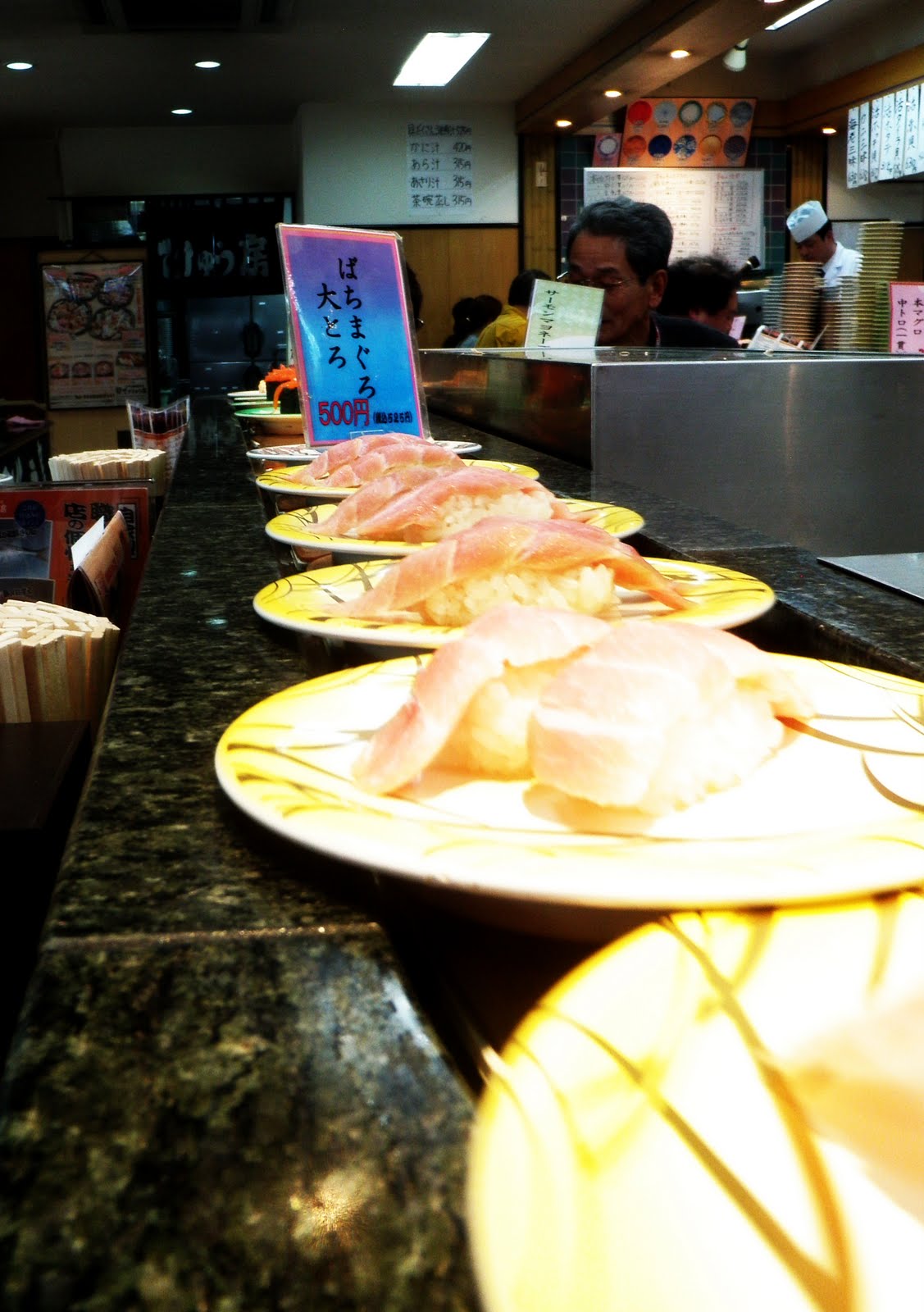
Experts estimate that sometime in 2012 (2012!!!) the Bluefin Tuna will pass the point of no return on the road to extinction, unless something changes.
If you want to help make the change and stop the extinction, support these guys. They're going to make a direct last ditch direct effort to stop illegal fishing, since much of the Tuna sold on the market is caught illegally. They also made the animation at the start of this post and are working on several other campaigns to raise awareness about our impact on the Bluefin Tuna.
For a broader scale impact, support WWF, who are working from a more political angle to stop the unsustainable fisheries practices.
Also, please, stop eating Bluefin Tuna. I don't want to cry.
12 February 2010
It's a Big Problem

Basking Shark (Cetorhinus maximus)
(Photo courtesy www.sharkireland.com)
The Basking Shark is endangered in the Pacific and in trouble in the Atlantic (COSEWIC 2007, listed as vulnerable by the IUCN) and is little known by most humans. A call to our lab to determine which “sea monster” carcass had washed up on a Nova Scotia shore had us discover a Basking Shark that had apparently died at sea.
These gentle giants can grow up to 15 metres in length and have the longest known gestation period of any vertebrate (up to 3.5 years!), so replacement is low. Despite their size, I think Basking Sharks are pretty cute. First, they’re filter feeders, so the fear factor is totally related to being humungous and able to knock your head off with a casual flip of the tail. Second, their rounded noses make them look a bit more like a seal than a shark. Unfortunately, they can become tangled in nets and fishing lines or hit by ships as they cruise near the surface of the water, feeding on the rich biodiversity of plankton there.
I’ve been up close and personal with a lot of Atlantic sharks, and their sheer bulk makes them seem invincible. They aren’t. In the pacific, the situation is even worse.
What can you do to help them out? As with any ocean fish, this is a tough question. Avoiding cruise ships is a good first step, but minimizing your contribution to water pollution (salts, fertilizers, sewage? learn more here) and eating a vegetarian diet (slower global warming and no nets or lines to tangle or maim non-target species) are even better. Finally, tell your friends! We’re the species responsible for their decline, so we can certainly act to change that.
11 December 2009
Viva Vaquita
Vaquita (Phocoena sinus), Critically Endangered
A new taskforce has been formed to prevent the extinction of the Vaquita, the world's rarest marine mammal. Check out the Viva Vaquita website for more information.
Here's a recent article about the latest happenings in the world of the Vaquita.
A new taskforce has been formed to prevent the extinction of the Vaquita, the world's rarest marine mammal. Check out the Viva Vaquita website for more information.
Here's a recent article about the latest happenings in the world of the Vaquita.
02 December 2009
Endangered Eating: The End of Tuna
 Atlantic and Southern Bluefin Tuna, (Thunnus thynnus and maccoyii), Critically Endangered
So much has been written about the plight of Bluefin Tuna that I feel it's pointless to add another article to the mix. However, if you aren't aware of what's happening to our Tuna, you should read one or two of the articles below. Our fish are being used up at a ridiculously unsustainable rate. If you can't be bothered to read any of the articles, the main gist is this--stop eating Bluefin Tuna for a while, or in a few years, there won't be any left.
Check out Tuna can stay on the menu... for now, to get an idea of which Tuna species are sustainably harvested if you're a Tuna lover, or become a sustainable seafood consumer.
Articles:
Tuna can stay on the menu... for now
Tagging the tigers of the sea
Are lower catch limits enough to save the bluefin tuna from extinction?
ICCAT fails to protect critically endangered tuna—again
Atlantic bluefin trade ban now vital as tuna commission fails to take action again
Mediterranean bluefin catches continue to mock quotas and science
Top French chefs take bluefin tuna off the menu
Don't Order the Tuna -- Endangered Fish Served as Sushi
Monaco seeks global bluefin tuna trade ban
Bluefin quota to cost Australian fisheries millions
Southern Bluefin Tuna crashing toward extinction to feed sushi & sushimi market
02 March 2009
Pass the Olives Please
 Olive Ridley Turtle (Lepidochelys olivacea), Vulnerable
Thousands of dead Olive Ridley Turtles wash up on the east coast of India every year, victims of shrimp trawlers, and fishing vessels using long-lines, and purse-seine and gill nets. Classified as Vulnerable (or in other terms, Nearly Endangered) by the IUCN, these turtles are also facing habitat degradation, over-harvesting of eggs and adults, and the impacts of global warming.
Many, though not all, Olive Ridleys nest in what are known as arribadas. An arribada (the Spanish word for arrival), is a mass breeding event, in which thousands of turtles leave the ocean at the same time to breed and lay eggs in sandy nests. One of the largest arribada sites is located near the mouth of the Dhamra River on the East coast of India, in the province of Orissa.
Currently, the construction of a port is in the works, very near the site of the arribada. The company carrying out the construction is a joint venture between Tata Steel and Larsen and Toubro Ltd., two Indian companies. Set to open in 2010, the port has met resistance from environmental groups concerned about the impacts of shipping traffic and the port construction on the turtles breeding grounds.
Check out a map of the proposed port site and the turtle breeding grounds here.
Although the joint company has conducted an Enviroment Impact Analysis, allegations have been made that it is inadequate and does not take into account all relevant factors. Though the company has partnered with the IUCN to "minimize and mitigate the impacts" of the development, many believe the most effective solution for the protection of the turtles is the relocation of the proposed port.
One of the biggest concerns is an increase in artificial lighting. Both nesting females and newly hatched turtles use light as a cue--the ocean is naturally brighter than land. Artificial lighting disorients many turtles, causing them to head inland rather than towards the sea. The increased industrialization that will undoubtedly occur in the area is another concern, bringing higher levels of pollution, disrupting the local marine ecosystem.
Check out the Wild Foundation, working to prevent the construction of the port.
Write a letter protesting the construction of the port.
Read about the companies environmental policies, and their defense of the port.
02 December 2008
Baby Goliaths Can't Hide
Goliath Grouper (Epinephelus itajara), Critically Endangered
 The Critically Endangered Goliath Grouper is the largest grouper in the Atlantic, growing more than 2 meters (6 feet) long, weighing more than 450 kg (1000 lbs), and living up to 40 years. Recently, the Ocean Research & Conservation Association (ORCA) used an underwater acoustic camera system (similar to the sonar dolphins or bats use) to visualize baby Goliaths among the murky waters of mangrove roots. Baby Goliaths, up to 1 meter long, spend the first 5-6 years of their lives, almost exclusively in and amongst the waters around mangroves.
Conservation action began in 1990 when the US placed a moratorium on fishing, and the Caribbean did the same in 1993. Though the population has increased it will take many years for numbers to recover to previous levels. Additionally, in some areas, fishing continues despite the bans. It is sometimes difficult to accurately assess the recovery of the species, in part because of the inability to visualize Baby Goliath numbers in murky and cloudy waters. The new camera system used by ORCA should alleviate this problem, and make surveys of Goliath populations easier.
Read an article here.
Donate to Ocean Futures, an Ocean Conservation that has worked to conserve the Goliath Grouper in the past.
 The Critically Endangered Goliath Grouper is the largest grouper in the Atlantic, growing more than 2 meters (6 feet) long, weighing more than 450 kg (1000 lbs), and living up to 40 years. Recently, the Ocean Research & Conservation Association (ORCA) used an underwater acoustic camera system (similar to the sonar dolphins or bats use) to visualize baby Goliaths among the murky waters of mangrove roots. Baby Goliaths, up to 1 meter long, spend the first 5-6 years of their lives, almost exclusively in and amongst the waters around mangroves.
Conservation action began in 1990 when the US placed a moratorium on fishing, and the Caribbean did the same in 1993. Though the population has increased it will take many years for numbers to recover to previous levels. Additionally, in some areas, fishing continues despite the bans. It is sometimes difficult to accurately assess the recovery of the species, in part because of the inability to visualize Baby Goliath numbers in murky and cloudy waters. The new camera system used by ORCA should alleviate this problem, and make surveys of Goliath populations easier.
Read an article here.
Donate to Ocean Futures, an Ocean Conservation that has worked to conserve the Goliath Grouper in the past.
19 October 2008
Hector's Dolphins Still Unprotected
Hector's Dolphin (Cephalorhynchus hectori), Endangered
 A new study by researchers at New Zealand's Otago University has added to the mountain of evidence that Hector's Dolphins are being killed at a rate that will lead to their extinction . . . unless something changes. These dolphins, with their uniquely rounded dorsal fins, are declining due to commercial and recreational fishing using gill nets and other methods that entangle them as bycatch.
Hector's Dolphins have the most limited range of any cetacean, except the Vaquita. Living only around the coast of New Zealand's two islands, they are divided into two subspecies. The South Island Hector's Dolphins have been reduced to less than 7500 individuals, while the Critically Endangered North Island subspecies, also known as Maui's Dolphins, have been reduced to a mere 110 individuals.
The New Zealand government has restricted fishing in parts of the Dolphin's range, but complete protection has not been realized, partially because of resistance from the fishing industry.
If you want to help, you can petition the New Zealand Government to enact full protection, adopt a Hector's Dolphin through WWF New Zealand, or join a Facebook Cause dedicated to the Hector's and Maui's Dolphins.
 A new study by researchers at New Zealand's Otago University has added to the mountain of evidence that Hector's Dolphins are being killed at a rate that will lead to their extinction . . . unless something changes. These dolphins, with their uniquely rounded dorsal fins, are declining due to commercial and recreational fishing using gill nets and other methods that entangle them as bycatch.
Hector's Dolphins have the most limited range of any cetacean, except the Vaquita. Living only around the coast of New Zealand's two islands, they are divided into two subspecies. The South Island Hector's Dolphins have been reduced to less than 7500 individuals, while the Critically Endangered North Island subspecies, also known as Maui's Dolphins, have been reduced to a mere 110 individuals.
The New Zealand government has restricted fishing in parts of the Dolphin's range, but complete protection has not been realized, partially because of resistance from the fishing industry.
If you want to help, you can petition the New Zealand Government to enact full protection, adopt a Hector's Dolphin through WWF New Zealand, or join a Facebook Cause dedicated to the Hector's and Maui's Dolphins.
09 September 2008
One. Five. Zero.
Vaquita (Phocoena sinus), Critically Endangered

One. Five. Zero.
That's the estimated number of Vaquitas Marinas, or little sea cows still alive. These miniature porpoises (featured here previously), which live only in the Gulf of California, are the most endangered cetacean. If nothing is done, they are likely to become extinct within the next year or two, or sooner.
The main cause of their decline, is not habitat loss, climate change, or pollution (although these things do affect the Vaquita). The biggest threat to the survival of the Vaquita is the nets local fishermen. The nets are intended for other fish and shrimp, but an estimated 40 are caught accidentally each year. When your total population is 150, losing 40 is a big deal.
The Mexican government is pledging 16 million US dollars to pay fishermen to avoid the Vaquita's habitat or to stop fishing altogether. Some of the money will also be spent to teach fishermen alternative techniques using snares that are too small to endanger Vaquitas.
So far, about 1000 fishermen (40%) have agreed to stay out of Vaquita habitat or stop fishing altogether. This is a good start, but more is needed. With the population already so low, if the Vaquita is to make a full recovery, accidental deaths due to fishing must be reduced to zero.
Here's a great site with information about the history of the conservation of the Vaquita and the threats it faces.
Support the survival of the Vaquita (cheque only).

One. Five. Zero.
That's the estimated number of Vaquitas Marinas, or little sea cows still alive. These miniature porpoises (featured here previously), which live only in the Gulf of California, are the most endangered cetacean. If nothing is done, they are likely to become extinct within the next year or two, or sooner.
The main cause of their decline, is not habitat loss, climate change, or pollution (although these things do affect the Vaquita). The biggest threat to the survival of the Vaquita is the nets local fishermen. The nets are intended for other fish and shrimp, but an estimated 40 are caught accidentally each year. When your total population is 150, losing 40 is a big deal.
The Mexican government is pledging 16 million US dollars to pay fishermen to avoid the Vaquita's habitat or to stop fishing altogether. Some of the money will also be spent to teach fishermen alternative techniques using snares that are too small to endanger Vaquitas.
So far, about 1000 fishermen (40%) have agreed to stay out of Vaquita habitat or stop fishing altogether. This is a good start, but more is needed. With the population already so low, if the Vaquita is to make a full recovery, accidental deaths due to fishing must be reduced to zero.
Here's a great site with information about the history of the conservation of the Vaquita and the threats it faces.
Support the survival of the Vaquita (cheque only).
17 November 2007
Last Chance for the Vaquita
Vaquita (Phocoena sinus), critically endangered

Way back in February, I blogged about the 'little cows' or Vaquitas, which live only in the upper regions of the Gulf of California. At that time, their numbers were estimated to be under 400. That number has dropped to an estimated 150, although it's possible this number may be lower.
Then, as now, the greatest danger to the Vaquita is accidental death in the nets of fishing crews. At least 40, and possibly more, are killed each year as by catch. Scientists say that at least 100 Vaquitas must survive to preserve enough genetic diversity for the porpoises to prosper. That leaves, optimistically, only two years in which a turn around must occur. While there have been efforts in the past to create zones where fishing is not allowed, they have failed.
Now, in a last ditch effort to save the Vaquita, WWF, Nature Conservancy, Conservation International, and the Mexican government have pledged $14 million to buy boats and nets that kill the Vaquita, and developing economic alternatives for local fishermen. If this and other efforts do not work, the Vaquita will go extinct.
Here's an article with more info.
Support the survival of the Vaquita (cheque only).

Way back in February, I blogged about the 'little cows' or Vaquitas, which live only in the upper regions of the Gulf of California. At that time, their numbers were estimated to be under 400. That number has dropped to an estimated 150, although it's possible this number may be lower.
Then, as now, the greatest danger to the Vaquita is accidental death in the nets of fishing crews. At least 40, and possibly more, are killed each year as by catch. Scientists say that at least 100 Vaquitas must survive to preserve enough genetic diversity for the porpoises to prosper. That leaves, optimistically, only two years in which a turn around must occur. While there have been efforts in the past to create zones where fishing is not allowed, they have failed.
Now, in a last ditch effort to save the Vaquita, WWF, Nature Conservancy, Conservation International, and the Mexican government have pledged $14 million to buy boats and nets that kill the Vaquita, and developing economic alternatives for local fishermen. If this and other efforts do not work, the Vaquita will go extinct.
Here's an article with more info.
Support the survival of the Vaquita (cheque only).
21 March 2007
Endangered Eating - Phillipine Dish of the Day
Giant Grouper
Dwarf Pygmy Goby
Whale Shark
Basking Shark
Zebra Shark
Big-eye Tuna
Blue-fin Tuna
Giant Manta Ray
Sea Turtles
Whale
Dolphin
These are just a few of the endangered species that are found on the menus of many restaurants in Manila. Although it is illegal both within the country and internationally to harvest, sell, or trade these species, they continue to persist in restaurants in the Phillipines. With 40 million Phillipinos relying on seafood as a primary part of their diet, and unchecked poaching, barely 1% of the countries reefs remain in pristine condition.
Here's a story about some poachers who may be getting off too easy.
Dwarf Pygmy Goby
Whale Shark
Basking Shark
Zebra Shark
Big-eye Tuna
Blue-fin Tuna
Giant Manta Ray
Sea Turtles
Whale
Dolphin
These are just a few of the endangered species that are found on the menus of many restaurants in Manila. Although it is illegal both within the country and internationally to harvest, sell, or trade these species, they continue to persist in restaurants in the Phillipines. With 40 million Phillipinos relying on seafood as a primary part of their diet, and unchecked poaching, barely 1% of the countries reefs remain in pristine condition.
Here's a story about some poachers who may be getting off too easy.
05 March 2007
Poison, Pests, and Politics
Grey-headed Albatross (Thalassarche chrysostoma)
Wandering Albatross (Diomedea exulans)
Macquarie Island, a World Heritage site, and part of the Australian state of Tasmania, is currently overrun with pests. Cats, rats, and rabbits were introducted to the island in the 19th century by sealers and whalers, all of which are extremely harmful to the native wildlife, especially birds. And the birds that live here include several endangered and vulnerable species. About 80 pairs of Grey-headed Albatross breed there, and the island is important habitat for both Grey-headed and Wandering Albatrosses.
In 2000, the last cat on the island was removed, but this had the unfortunate effect of allowing a population explosion among the rabbits and rats that were left. Plans are underway to exterminate the rabbits and rats, using poison delivered by helicopters during the winter, when most of the birds are at sea. However, the plans have been delayed because of wrangling between the state and federal governments over who should fund the approximately 16.5 million dollar program. The federal government has agreed to fund half the program, but the state believes they should cover the whole cost.
Cool fact about Macquarie Island: It is the only place in the world where the oceanic crust is exposed above the surface of the sea.
Articles, articles, articles.
Wandering Albatross (Diomedea exulans)
Macquarie Island, a World Heritage site, and part of the Australian state of Tasmania, is currently overrun with pests. Cats, rats, and rabbits were introducted to the island in the 19th century by sealers and whalers, all of which are extremely harmful to the native wildlife, especially birds. And the birds that live here include several endangered and vulnerable species. About 80 pairs of Grey-headed Albatross breed there, and the island is important habitat for both Grey-headed and Wandering Albatrosses.
In 2000, the last cat on the island was removed, but this had the unfortunate effect of allowing a population explosion among the rabbits and rats that were left. Plans are underway to exterminate the rabbits and rats, using poison delivered by helicopters during the winter, when most of the birds are at sea. However, the plans have been delayed because of wrangling between the state and federal governments over who should fund the approximately 16.5 million dollar program. The federal government has agreed to fund half the program, but the state believes they should cover the whole cost.
Cool fact about Macquarie Island: It is the only place in the world where the oceanic crust is exposed above the surface of the sea.
Articles, articles, articles.
13 February 2007
Little Cows in Danger
Vaquita (Phocoena sinus)
The Vaquita, which means little cow in Spanish, may not survive more than a few years, if immediate action is not taken. It is estimated that there are fewer than 400 individuals in their limited range, which encompasses the Northern part of the Gulf of California.
The main threat to this species is accidental bycatch in the nets of local fishermen. Fishing is the main economical driver in this region, complicating the Vaquita's plight, even further. Another problem may be the drastically reduced flow of the Colorado river due to damming, and the run-off of pesticides drained from agricultural lands along the river.
Conservationists are attempting to find solutions to this problem. Read more here.
Wikipedia article.
Support EDGE or WWF International, both of whom are working to save this species.
The Vaquita, which means little cow in Spanish, may not survive more than a few years, if immediate action is not taken. It is estimated that there are fewer than 400 individuals in their limited range, which encompasses the Northern part of the Gulf of California.
The main threat to this species is accidental bycatch in the nets of local fishermen. Fishing is the main economical driver in this region, complicating the Vaquita's plight, even further. Another problem may be the drastically reduced flow of the Colorado river due to damming, and the run-off of pesticides drained from agricultural lands along the river.
Conservationists are attempting to find solutions to this problem. Read more here.
Wikipedia article.
Support EDGE or WWF International, both of whom are working to save this species.
Circle Hooks Save Turtles
A new kind of fishing hook, shaped as a circle instead of a 'j' may help prevent accidental bycatch of sea turtles, which causes uncounted numbers of sea turtle deaths every year. Although these hooks might have been around for a little while, it seems like they may start to gain more acceptance in the commercial fisheries industry.
10 February 2007
Whale ho!
North Atlantic Right Whale (Eubalaena glacialis)
Listed as Endangered on the IUCNs Redlist, there are only an estimated 300-350 individuals of this species left in the ocean. Scientists from Cornell University started an experiment in December, using underwater microphones to determine the whales' position based on their vocalizations. They hope that by being abe to detect the whales' presence in real-time, they will be able to provide this information to ships, thus preventing mortality caused by collisions.
A brief article.
Listed as Endangered on the IUCNs Redlist, there are only an estimated 300-350 individuals of this species left in the ocean. Scientists from Cornell University started an experiment in December, using underwater microphones to determine the whales' position based on their vocalizations. They hope that by being abe to detect the whales' presence in real-time, they will be able to provide this information to ships, thus preventing mortality caused by collisions.
A brief article.
08 February 2007
Hundreds of Sea Turtles Dead
Olive Ridley (Lepidochelys olivacea)
In the past two weeks, hundreds of Olive Ridleys, one of the smallest sea turtles, have been found dead. They are being washed up on shore along the coast of Bangladesh. In the past ten years, over 100,000 Olive Ridleys have washed ashore dead, likely due to offshore drilling and trawling.
Read about Olive Ridleys from a second-hand source.
Read about them from an eye-witness.
Join Greenpeace's Ocean Defenders.
See what they look like.
In the past two weeks, hundreds of Olive Ridleys, one of the smallest sea turtles, have been found dead. They are being washed up on shore along the coast of Bangladesh. In the past ten years, over 100,000 Olive Ridleys have washed ashore dead, likely due to offshore drilling and trawling.
Read about Olive Ridleys from a second-hand source.
Read about them from an eye-witness.
Join Greenpeace's Ocean Defenders.
See what they look like.
06 February 2007
Endangered Eating - Fish and Chips
Spiny Dogfish (Squalus acanthias)
Porbeagle (Lamna nasus)
What do Schillerlocken, Saumonette, Fish and Chips, Zeepaling, and Rock Salmon have in common? All of them are foods made from the meat of the Spiny Dogfish, a species of shark listed as Vulnerable, on the IUCN’s Redlist of Endangered Species.
In Germany, Schillerlocken is a smoked meat delicacy. In France, it is sold as saumonette, which translates to little salmon. In the UK, order some Fish and Chips, and Rock Salmon, another name for the shark, is what you’ll get. Or go to Belgium and dine on zeepaling, aka sea eel. Another way to enjoy this endangered species is as shark fin soup in Chinese cuisine.
Another shark, the Porbeagle (also listed as Vulnerable on the Redlist), is eaten fresh, frozen, dried, and salted throughout Europe. Both species are declining, mainly as a result of overfishing to meet demand.
A proposal is being spearheaded by the German government, to add these two species to Appendix II of the CITES agreement, which would require that international trade in these species be sustainable and non-detrimental to the species or their ecosystems. However, the success of the proposal is questionable, as it requires the support of the rest of the EU member countries.
Help spread the word about the dangers of overfishing sharks through the Shark Alliance, or donate to Oceana, an organization active in preserving many ocean species, including sharks.
References here, here, here, and here. And here and here.
Porbeagle (Lamna nasus)
What do Schillerlocken, Saumonette, Fish and Chips, Zeepaling, and Rock Salmon have in common? All of them are foods made from the meat of the Spiny Dogfish, a species of shark listed as Vulnerable, on the IUCN’s Redlist of Endangered Species.
In Germany, Schillerlocken is a smoked meat delicacy. In France, it is sold as saumonette, which translates to little salmon. In the UK, order some Fish and Chips, and Rock Salmon, another name for the shark, is what you’ll get. Or go to Belgium and dine on zeepaling, aka sea eel. Another way to enjoy this endangered species is as shark fin soup in Chinese cuisine.
Another shark, the Porbeagle (also listed as Vulnerable on the Redlist), is eaten fresh, frozen, dried, and salted throughout Europe. Both species are declining, mainly as a result of overfishing to meet demand.
A proposal is being spearheaded by the German government, to add these two species to Appendix II of the CITES agreement, which would require that international trade in these species be sustainable and non-detrimental to the species or their ecosystems. However, the success of the proposal is questionable, as it requires the support of the rest of the EU member countries.
Help spread the word about the dangers of overfishing sharks through the Shark Alliance, or donate to Oceana, an organization active in preserving many ocean species, including sharks.
References here, here, here, and here. And here and here.
01 February 2007
Death of Critically Endangered Whale
Gray Whale (Eschrichtius robustus)
The IUCN released a report today, of the fourth Western Gray Whale death in two years, due to entanglement in fishing nets. The whale was a young female, and was discovered on 19th January 2007 in Yoshihama Bay, off the Northeasten Coast of Honshu.
The Gray Whale was hunted nearly to extinction in the 19th and early 20th centuries. In 1947, the International Whaling Commission (IWC) placed a ban on killing Gray Whales. Today, two distinct populations exist--the Eastern and Western Pacific Gray Whales. The Eastern population, which migrates between Alaska and Baja Mexico, has rebounded since the IWC ban, and today numbers over 20,000. In recent years, however, mortality has been increasing and the production of offspring has been decreasing, boding ill for this population.
The critically endangered Western Gray Whale, which summers in the Sea of Okhotsk, and winters in the coastal waters of Japan, Korea, and China, never recovered, and today numbers approximately 120 individuals, and only 20-25 reproductive females. This western population faces continued pressure from oil and gas field development off of Sakhalin Island, as well as entrapment in fishing gear and collisions with ships.
Translation of an article from a Japanese Newspaper.
The IUCN's listing.
Donate to the National Resources Defense Council (NRDC) to help prevent whale deaths due to military sonar.
Gray Whale images.
For a great read on the Gray Whale, check out Dick Russell's book Eye of the Whale: Epic Passage from Baja to Siberia.
The IUCN released a report today, of the fourth Western Gray Whale death in two years, due to entanglement in fishing nets. The whale was a young female, and was discovered on 19th January 2007 in Yoshihama Bay, off the Northeasten Coast of Honshu.
The Gray Whale was hunted nearly to extinction in the 19th and early 20th centuries. In 1947, the International Whaling Commission (IWC) placed a ban on killing Gray Whales. Today, two distinct populations exist--the Eastern and Western Pacific Gray Whales. The Eastern population, which migrates between Alaska and Baja Mexico, has rebounded since the IWC ban, and today numbers over 20,000. In recent years, however, mortality has been increasing and the production of offspring has been decreasing, boding ill for this population.
The critically endangered Western Gray Whale, which summers in the Sea of Okhotsk, and winters in the coastal waters of Japan, Korea, and China, never recovered, and today numbers approximately 120 individuals, and only 20-25 reproductive females. This western population faces continued pressure from oil and gas field development off of Sakhalin Island, as well as entrapment in fishing gear and collisions with ships.
Translation of an article from a Japanese Newspaper.
The IUCN's listing.
Donate to the National Resources Defense Council (NRDC) to help prevent whale deaths due to military sonar.
Gray Whale images.
For a great read on the Gray Whale, check out Dick Russell's book Eye of the Whale: Epic Passage from Baja to Siberia.
29 January 2007
Possibilities
I can't really point to a specific incident that caused me to feel strongly about endangered species. I do know that I've always enjoyed learning about interesting plants and animals (and they're all interesting, if you look hard enough). Probably, it's the thought that I may never get to hear the booming calls of the New Zealand kakapo, or see a black-footed ferret peeping out of an abandoned prairie dog mound in South Dakota, or swim in salty blue water with a leather back turtle. I may not get to do some of these things even if all endangered species survive years into the future, but I'd rather live in a world where the possibility exists.
Subscribe to:
Posts (Atom)