Check out this great blog post from Eating . . . Our Words, a blog hosted by Houston Press. It details ten species of endangered fish that are still commonly eaten, and asks the question "Why are we still eating species that are on the verge of collapse?"
10 Fish You're Eating That Are Endangered Species
Here's a list of different organizations and advisories focusing on sustainable seafood choices.
Showing posts with label Over-harvesting. Show all posts
Showing posts with label Over-harvesting. Show all posts
28 September 2011


03 May 2011
Bluefin Blues
Northern Bluefin Tuna (Thunnus Thynnus), Critically Endangered
I'm in Japan for my brother's wedding, and I almost cried. Not because of the wedding. Because of the Bluefin Tuna.
The Bluefin Tuna, known in Japan as Hone Maguro, is prized as a delicious morsel of sushi and is extremely popular. I went down to the Tsukiji Fish Market in Tokyo, the largest wholesale seafood market in the world, two days ago, hoping to get a glimpse of the auction where the Tuna are sold. The Tuna auction (and the entire wholesale portion of the market) was closed to tourists, so my family and I snuck in. Walking past aisle upon aisle of Shellfish, Molluscs, and hundreds of Fish species, I was appalled to see a sign for a booth selling Whale. My mother reminded me that fishing was in my heritage (I'm half Japanese), and I felt ashamed.
 Though I only managed to get a few glimpses and blurry photographs of the rows of frozen Tuna bodies as the guards were escorting us out, I was sad and angry that we are still killing and eating a species that is so close to extinction.
 The next day, I went to a sushi restaurant with my aunts, grandparents, uncles, brothers, nieces, parents, and sister-in-law. Several of them selected slender cuts of Bluefin as they scrolled by on the moving conveyor belt. They hid their eyes from me in joking half embarrassment as they downed the delicious morsels. That's when I almost cried.
Experts estimate that sometime in 2012 (2012!!!) the Bluefin Tuna will pass the point of no return on the road to extinction, unless something changes.
If you want to help make the change and stop the extinction, support these guys. They're going to make a direct last ditch direct effort to stop illegal fishing, since much of the Tuna sold on the market is caught illegally. They also made the animation at the start of this post and are working on several other campaigns to raise awareness about our impact on the Bluefin Tuna.
For a broader scale impact, support WWF, who are working from a more political angle to stop the unsustainable fisheries practices.
Also, please, stop eating Bluefin Tuna. I don't want to cry.
I'm in Japan for my brother's wedding, and I almost cried. Not because of the wedding. Because of the Bluefin Tuna.
The Bluefin Tuna, known in Japan as Hone Maguro, is prized as a delicious morsel of sushi and is extremely popular. I went down to the Tsukiji Fish Market in Tokyo, the largest wholesale seafood market in the world, two days ago, hoping to get a glimpse of the auction where the Tuna are sold. The Tuna auction (and the entire wholesale portion of the market) was closed to tourists, so my family and I snuck in. Walking past aisle upon aisle of Shellfish, Molluscs, and hundreds of Fish species, I was appalled to see a sign for a booth selling Whale. My mother reminded me that fishing was in my heritage (I'm half Japanese), and I felt ashamed.

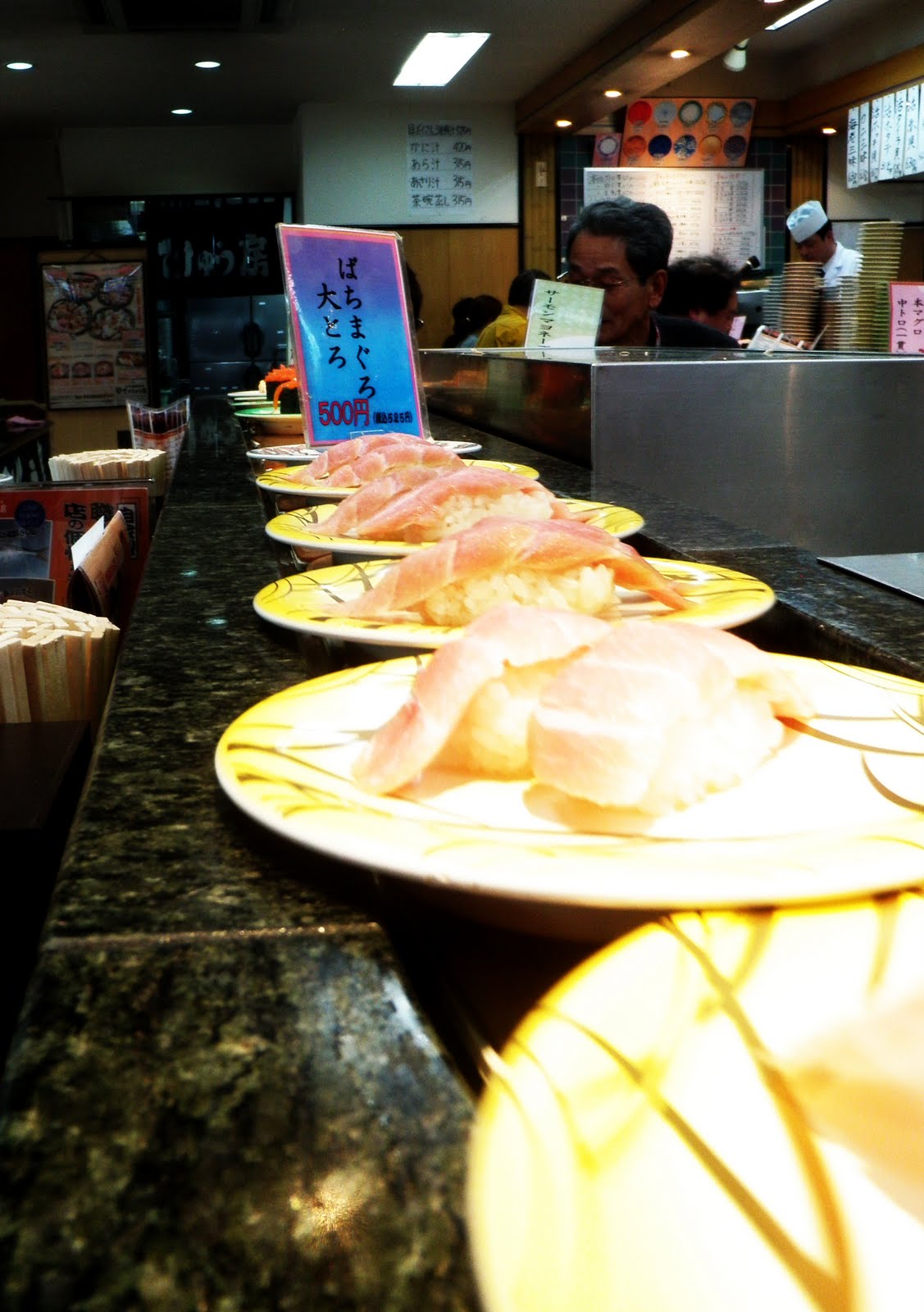
Experts estimate that sometime in 2012 (2012!!!) the Bluefin Tuna will pass the point of no return on the road to extinction, unless something changes.
If you want to help make the change and stop the extinction, support these guys. They're going to make a direct last ditch direct effort to stop illegal fishing, since much of the Tuna sold on the market is caught illegally. They also made the animation at the start of this post and are working on several other campaigns to raise awareness about our impact on the Bluefin Tuna.
For a broader scale impact, support WWF, who are working from a more political angle to stop the unsustainable fisheries practices.
Also, please, stop eating Bluefin Tuna. I don't want to cry.
17 December 2009
Collector's Item
Gooty Sapphire (Poecilotheria metallica), Critically Endangered

The first thing I learned about this tree dwelling tarantula, was that it has to be seen to be believed. When I saw a picture, I understood why. The rare beauty of this spider's color may be its salvation or its doom.
Native to a tiny, tiny, tiny, patch of India, this entire species occupies less than 100 km squared--and that's a generous estimate. Sounds big, but look at this map, and you'll see just how tiny it is.
With it's habitat being degraded as humans cut trees for timber and firewood, it's up for debate whether the smugglers who have spirited some of these spiders out of the country will ultimately help the spiders or cause their demise.
Coveted among spider and insect collectors and hobbyists for their colour, these spiders are being bred in captivity by specialist pet shops. A young Sapphire Gooty spiderling can fetch more than US$150. Although they are fairly rare right now, as hobbyists continue to breed them, they may become more common.
I don't generally support taking wild animals out of their native habitat for use as pets, but perhaps this time it might save them, or at least ensure that some remain if they can no longer survive in the wild.
What do you think? Is this biopiracy or conservation in disguise?
02 December 2009
Endangered Eating: The End of Tuna
 Atlantic and Southern Bluefin Tuna, (Thunnus thynnus and maccoyii), Critically Endangered
So much has been written about the plight of Bluefin Tuna that I feel it's pointless to add another article to the mix. However, if you aren't aware of what's happening to our Tuna, you should read one or two of the articles below. Our fish are being used up at a ridiculously unsustainable rate. If you can't be bothered to read any of the articles, the main gist is this--stop eating Bluefin Tuna for a while, or in a few years, there won't be any left.
Check out Tuna can stay on the menu... for now, to get an idea of which Tuna species are sustainably harvested if you're a Tuna lover, or become a sustainable seafood consumer.
Articles:
Tuna can stay on the menu... for now
Tagging the tigers of the sea
Are lower catch limits enough to save the bluefin tuna from extinction?
ICCAT fails to protect critically endangered tuna—again
Atlantic bluefin trade ban now vital as tuna commission fails to take action again
Mediterranean bluefin catches continue to mock quotas and science
Top French chefs take bluefin tuna off the menu
Don't Order the Tuna -- Endangered Fish Served as Sushi
Monaco seeks global bluefin tuna trade ban
Bluefin quota to cost Australian fisheries millions
Southern Bluefin Tuna crashing toward extinction to feed sushi & sushimi market
21 April 2009
Get Us Out of Here!
 Giant Ditch Frog (Leptodactylus fallax), Critically Endangered
The Giant Ditch Frog, also known as the Mountain Chicken by locals due to its size and the taste of its flesh, is confined to two small islands in the Carribbean: Montserrat and Dominica. Although it used to inhabit several other nearby islands, it's total current range on the two islands is less than 50 km squared.
What caused it's decline? Environmental factors such as hurricanes and volcanoes may have played a part, as well as over-harvesting for food, with an estimated annual take of 8,000-36,000 (the government imposed a hunting ban on this former national dish, when populations started to decline).
Adding to the dilemma of this critically endangered amphibian is the world wide chytrid fungus crisis, a disease that is decimating frog populations around the globe. Although the island of Dominica has been infected since 2002, the island of Montserrat managed to remain disease free--until recently. In late 2008 or early 2009 the fungus made the jump to Montserrat and is currently decimating the Giant Ditch Frog population there, killing hundreds in just the past few weeks.
Fortunately, Durrell Wildlife Conservation Trust and the Zoological Society of London (ZSL) have stepped in to help save this rare animal. Going into an area of healthy frogs where the disease had not yet reached, conservationists have successfully removed 50 individuals and airlifted them to Europe for use in a captive breeding program. Twelve of the Frogs will go to the ZSL, 12 to Durrell Wildlife, and the remaining 26 will go to Parken Zoo in Stockholm. The frogs will be kept in special biosecure housings to prevent infection by the chytrid fungus.
The goal is to breed the frogs and reintroduce individuals to disease-free areas of Montserrat within two years. Although the frogs have been bred in captivity before, it is a difficult process, as they have huge appetites and have unusual breeding habits for frogs. After digging a hole in the ground and filling it with foam, the female deposits 15-50 tiny eggs. The eggs hatch and develop into tadpoles, all in this isolated foam nest. For food, the mother deposits unfertilized eggs every few days for the young to feed on.
Although the captive breeding program promises hope for the Giant Ditch Frog, more needs to be done. Durrell Wildlife is currently raising funds to build an additional bio-secure facility to house these endangered frogs. For as little as 10 pounds (15 USD, 18 CAD), you can support the care of a Giant Ditch Frog. Donate or shop online or call Natalie Ranise on 01534 860013 (UK).
02 March 2009
Pass the Olives Please
 Olive Ridley Turtle (Lepidochelys olivacea), Vulnerable
Thousands of dead Olive Ridley Turtles wash up on the east coast of India every year, victims of shrimp trawlers, and fishing vessels using long-lines, and purse-seine and gill nets. Classified as Vulnerable (or in other terms, Nearly Endangered) by the IUCN, these turtles are also facing habitat degradation, over-harvesting of eggs and adults, and the impacts of global warming.
Many, though not all, Olive Ridleys nest in what are known as arribadas. An arribada (the Spanish word for arrival), is a mass breeding event, in which thousands of turtles leave the ocean at the same time to breed and lay eggs in sandy nests. One of the largest arribada sites is located near the mouth of the Dhamra River on the East coast of India, in the province of Orissa.
Currently, the construction of a port is in the works, very near the site of the arribada. The company carrying out the construction is a joint venture between Tata Steel and Larsen and Toubro Ltd., two Indian companies. Set to open in 2010, the port has met resistance from environmental groups concerned about the impacts of shipping traffic and the port construction on the turtles breeding grounds.
Check out a map of the proposed port site and the turtle breeding grounds here.
Although the joint company has conducted an Enviroment Impact Analysis, allegations have been made that it is inadequate and does not take into account all relevant factors. Though the company has partnered with the IUCN to "minimize and mitigate the impacts" of the development, many believe the most effective solution for the protection of the turtles is the relocation of the proposed port.
One of the biggest concerns is an increase in artificial lighting. Both nesting females and newly hatched turtles use light as a cue--the ocean is naturally brighter than land. Artificial lighting disorients many turtles, causing them to head inland rather than towards the sea. The increased industrialization that will undoubtedly occur in the area is another concern, bringing higher levels of pollution, disrupting the local marine ecosystem.
Check out the Wild Foundation, working to prevent the construction of the port.
Write a letter protesting the construction of the port.
Read about the companies environmental policies, and their defense of the port.
23 January 2009
Endangered Eating: Frog Legs
There's a great article by Corey Bradshaw, about the enormous number of frogs that are being consumed by humans around the world. With a low estimate of 180 million consumed annually, the upper limit may be far north of a billion.
With habitat loss, global warming, the chytrid crisis and all the other threats facing amphibians and frogs in particular, here's one more thing that's contributing to their decline.
I really encourage you to check out the original article.
With habitat loss, global warming, the chytrid crisis and all the other threats facing amphibians and frogs in particular, here's one more thing that's contributing to their decline.
I really encourage you to check out the original article.
02 December 2008
Baby Goliaths Can't Hide
Goliath Grouper (Epinephelus itajara), Critically Endangered
 The Critically Endangered Goliath Grouper is the largest grouper in the Atlantic, growing more than 2 meters (6 feet) long, weighing more than 450 kg (1000 lbs), and living up to 40 years. Recently, the Ocean Research & Conservation Association (ORCA) used an underwater acoustic camera system (similar to the sonar dolphins or bats use) to visualize baby Goliaths among the murky waters of mangrove roots. Baby Goliaths, up to 1 meter long, spend the first 5-6 years of their lives, almost exclusively in and amongst the waters around mangroves.
Conservation action began in 1990 when the US placed a moratorium on fishing, and the Caribbean did the same in 1993. Though the population has increased it will take many years for numbers to recover to previous levels. Additionally, in some areas, fishing continues despite the bans. It is sometimes difficult to accurately assess the recovery of the species, in part because of the inability to visualize Baby Goliath numbers in murky and cloudy waters. The new camera system used by ORCA should alleviate this problem, and make surveys of Goliath populations easier.
Read an article here.
Donate to Ocean Futures, an Ocean Conservation that has worked to conserve the Goliath Grouper in the past.
10 November 2008
First Home for Blue-throated Macaws
Blue-throated Macaw (Ara glaucogularis), Critically Endangered
 With only an estimated 300 individuals surviving in the wild, the Blue-throated Macaw is critically endangered. The threats come mainly from habitat loss and illegal trapping. To nest, the birds require motucu palms, which grow in islands dotting the grasslands of Bolivia. Unfortunately, the only known habitat suitable for the birds exists on private ranch lands, where annual burning and intensive cattle grazing occur. The other major threat to these birds is illegal trapping for the caged-bird market.
Fortunately, several conservation organizations working together have purchased an 8500+ acre ranch where Blue-throated Macaws are known to nest. This is the first protected area for these rare birds, which is great news. However, much more area needs to be protected to ensure the recovery and continued well-being of these magnificent birds. There are four other ranches for sale, that combined with the new purchase, hold 41% of the Blue-throated Macaw population. Unfortunately, at $30 an acre, the land is being eyed by foreign cattle ranchers.
If you want to help protect the habitat of the Blue-throated Macaw, you can donate to the World Land Trust, Bird Endowment, Loro Parque Foundation, or Asociación Armonía, all organizations involved in the conservation of the Macaws.
You can also buy a stuffed toy Blue-throated Macaw or sign up for a Parrot Lover's Cruise from Bird Endowment.
09 September 2008
One. Five. Zero.
Vaquita (Phocoena sinus), Critically Endangered

One. Five. Zero.
That's the estimated number of Vaquitas Marinas, or little sea cows still alive. These miniature porpoises (featured here previously), which live only in the Gulf of California, are the most endangered cetacean. If nothing is done, they are likely to become extinct within the next year or two, or sooner.
The main cause of their decline, is not habitat loss, climate change, or pollution (although these things do affect the Vaquita). The biggest threat to the survival of the Vaquita is the nets local fishermen. The nets are intended for other fish and shrimp, but an estimated 40 are caught accidentally each year. When your total population is 150, losing 40 is a big deal.
The Mexican government is pledging 16 million US dollars to pay fishermen to avoid the Vaquita's habitat or to stop fishing altogether. Some of the money will also be spent to teach fishermen alternative techniques using snares that are too small to endanger Vaquitas.
So far, about 1000 fishermen (40%) have agreed to stay out of Vaquita habitat or stop fishing altogether. This is a good start, but more is needed. With the population already so low, if the Vaquita is to make a full recovery, accidental deaths due to fishing must be reduced to zero.
Here's a great site with information about the history of the conservation of the Vaquita and the threats it faces.
Support the survival of the Vaquita (cheque only).
22 December 2007
Prize Fish
Mekong Giant Catfish (Pangasianodon gigas), Critically Endangered
Here's a great post, over at Endangered Ugly Things, about a crazy big fish.
Here's a great post, over at Endangered Ugly Things, about a crazy big fish.
Subscribe to:
Posts (Atom)